
The Landlord's Game — A History
A century-and-change ago, a stenographer in Maryland sat down to make a board game that would teach her neighbours about land economics. It became, by way of theft and a long lawsuit, the best-selling board game on Earth. Here is what actually happened.
There is a story most people know about Monopoly. It goes like this. A man named Charles Darrow, unemployed during the Great Depression, invented a board game on his kitchen table in Philadelphia, sold it to Parker Brothers in 1935, became a millionaire, and retired to travel the world. The story is printed on the inside of every Monopoly box made between 1936 and the 1970s. It is, in almost every meaningful particular, untrue.
The real inventor was a woman named Elizabeth Magie. She filed her patent in 1903. She received it on the fifth of January, 1904 — thirty-one years before Charles Darrow filed his. She did not become a millionaire. She received five hundred dollars from Parker Brothers in 1935 for a patent they wanted out of their way, and no royalties, and a handful of decades of obscurity, and an unmarked grave.
This is the history of her game.
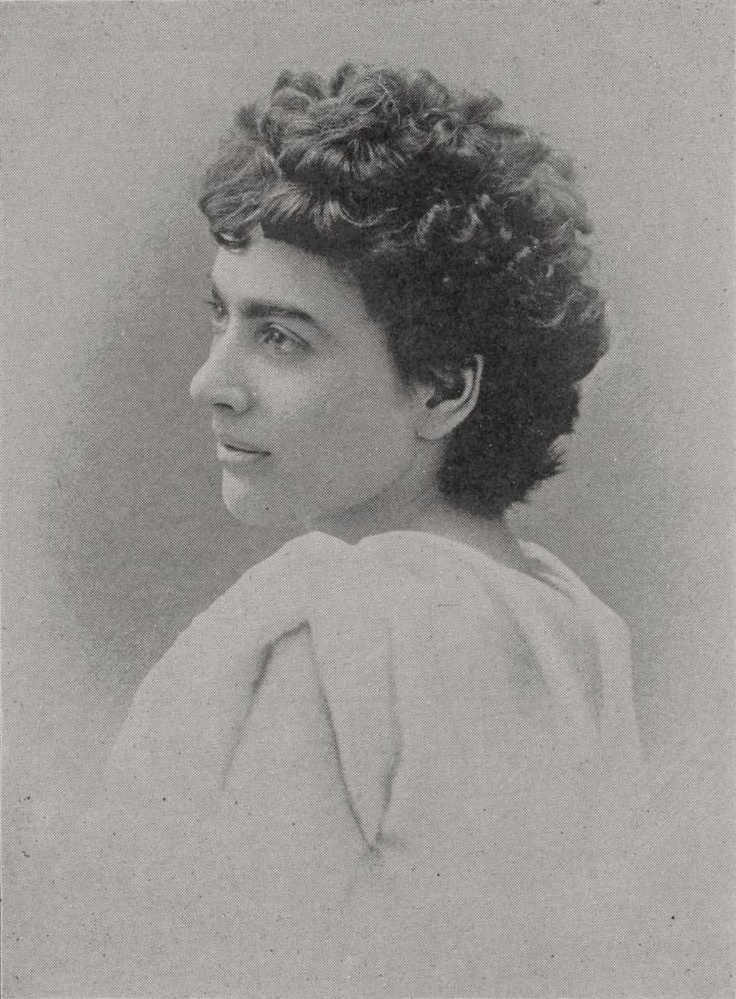

The woman who made the game
Elizabeth J. Phillips, née Magie — known throughout her life as Lizzie — was born in Macomb, Illinois, in the spring of 1866, the year after the Civil War ended. Her father, James Magie, was an abolitionist newspaper editor who had travelled with Abraham Lincoln during the Lincoln–Douglas debates. He was also a follower of the political economist Henry George. Lizzie grew up in a household where dinner-table conversation included the labour theory of value and the moral implications of land ownership. This is not normal childhood material. It mattered.
By her twenties, Lizzie was working as a stenographer at the Dead Letter Office in Washington, D.C. She also wrote. Poetry, short comic pieces, the occasional letter to the editor under a pseudonym. She performed on stage. She held a patent — her first — for an improvement to the typewriter, granted to her in 1893 at the age of twenty-six. She was, by every account, a woman with too much to do and not enough hours in which to do it.
In 1906 she famously placed a satirical advertisement in a Washington newspaper offering herself for sale as a “young woman American slave” to the highest bidder. The advertisement was a protest against the limited economic options available to single women. It was widely covered. She was, by then, deeply involved in the politics of Henry George.
[IMAGE PLACEHOLDER — The 1906 newspaper advertisement, “young woman American slave for sale.” A scan of this clipping has been reproduced in Mary Pilon’s The Monopolists; we have not yet sourced a freely-licensed reproduction.]
Henry George and the Single Tax
To understand the game, you have to understand what Lizzie was trying to teach.
Henry George was an American political economist who, in 1879, published a book called Progress and Poverty. It became, briefly, the second-best-selling book in the United States after the Bible. Its argument was specific and radical: that the value of land — as opposed to the value of buildings or labour or capital — derives almost entirely from the surrounding community, not from the landowner. A plot in central Manhattan is valuable not because the landowner has done anything to it, but because Manhattan is around it. To allow private landowners to capture that community-generated value, George argued, was to allow a small class of people to extract rent from everyone else, indefinitely, by virtue of doing nothing.
His proposed solution was the Single Tax: a tax on the unimproved value of land, set high enough to capture all of the community-generated rent, replacing every other form of taxation. Build a factory, hire workers, pay no tax on what you produce. Buy a vacant lot in a growing city and sit on it, pay tax on the rising land value as the city grows around you. The land would still be privately held — but the rent it generated would return to the community that produced it.
Georgism was a serious political movement at the turn of the twentieth century. George ran for mayor of New York in 1886. He came second, ahead of Theodore Roosevelt. The Single Tax had clubs, journals, summer camps, intentional communities. Lizzie Magie was a member of one such club in Washington. She was looking for ways to spread the idea, to get it past the eyes-glazing-over response that economic theory tends to provoke. She decided to make a game.


The 1904 patent
She called it The Landlord’s Game. She filed the patent application on the twenty-third of March, 1903. It was granted as US Patent No. 748,626 on the fifth of January, 1904. The patent drawings show a square board with forty spaces around the perimeter — corner squares for “Public Park,” “Go to Jail,” “Labor Upon Mother Earth Produces Wages,” and “Jail” — and a path of properties to be bought, rented, and traded around the edge.
If this sounds familiar, it is because every meaningful structural element of what would later be sold as Monopoly is already there in Lizzie’s 1904 patent. The continuous loop. The corner squares. The Chance cards. The railroads. The utilities. Jail. Properties grouped by colour and rented at escalating rates when developed. Players going around and around the board, accumulating cash from rent and from passing the starting square. All of it.
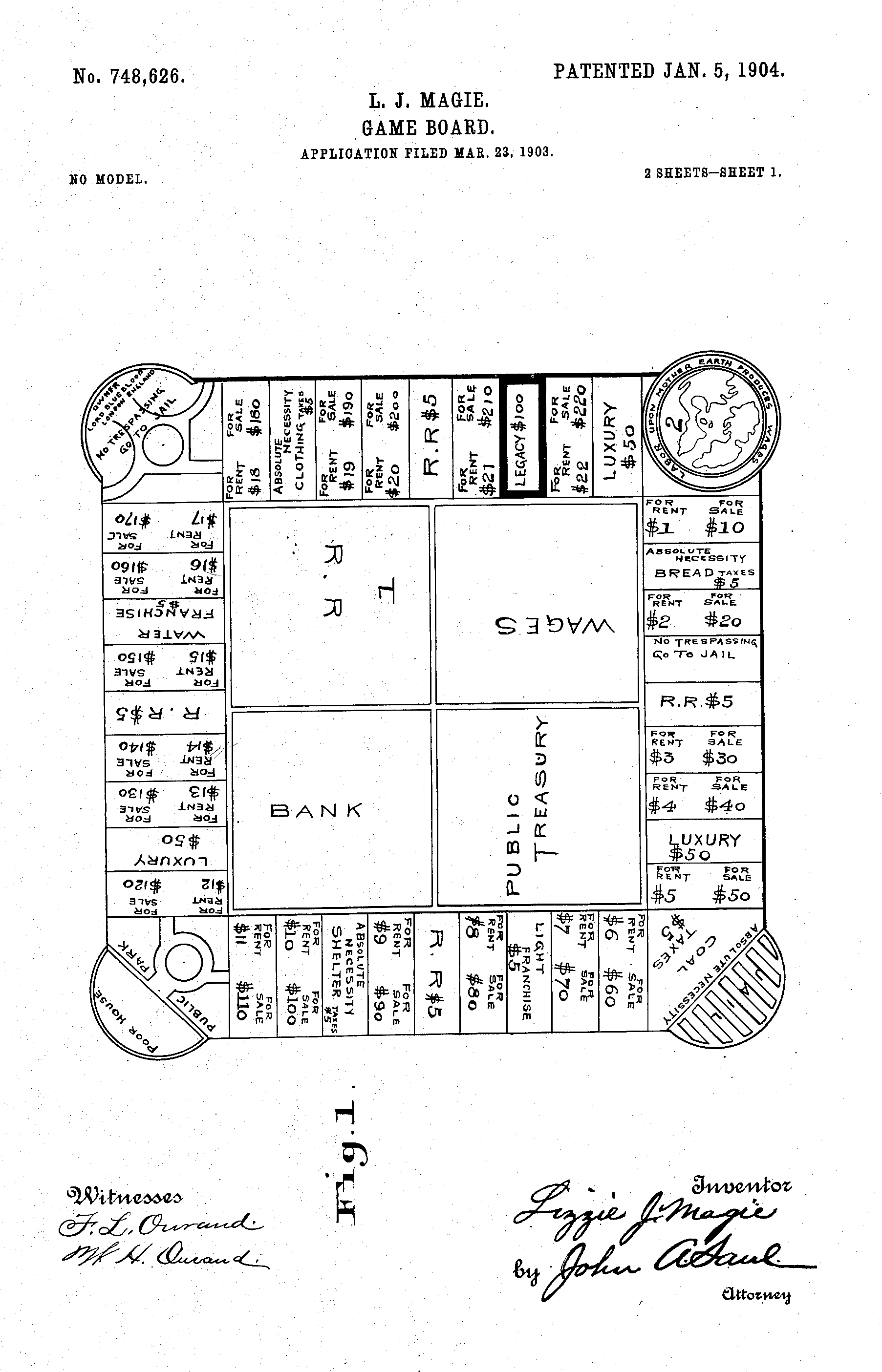

What is also there, and what was not in any version of Monopoly until very recently, is a second ruleset.
Two games on one board
Lizzie’s patent describes the Landlord’s Game as a game playable in two ways. She called them the Monopolist set and the Single Tax set. They use the same board, the same money, the same dice, the same properties — but the rules of how rent is collected, and where it goes, are flipped.
Under the Monopolist rules, players accumulate properties, drive each other into bankruptcy, and the last player solvent wins. This is the game most people now know.
Under the Single Tax rules, the rent collected on land flows back into a public treasury, which is used to fund public services and infrastructure that benefits everyone — wages rise, jail terms shorten, public works appear on the board. The win condition is not last-one-standing. It is everyone-playing-doubles-their-starting-cash. The game is collective and cooperative. It ends when prosperity is general, not when it is concentrated.
The point of having both rulesets, Lizzie wrote, was pedagogical. You play the Monopolist game and you experience, in your bones, the way that unrestrained land speculation strips wealth from the working players and concentrates it in the hands of whoever was lucky early. Then you play the Single Tax game on the same board and you watch the same engine produce a wholly different outcome. The lesson is in the contrast. The board does not change. The rules do. The world it produces is unrecognisable.
“It is a practical demonstration of the present system of land-grabbing with all its usual outcomes and consequences.” — Elizabeth Magie, 1904


How the game spread
The Landlord’s Game was published commercially by the Economic Game Company of New York in 1906, and again by the Newbie Game Company. It sold modestly. But it spread far further than its commercial sales suggest, because it was the kind of game that travelled by hand. Georgist clubs played it. Quaker communities played it. The economics department at Wharton played it. Scott Nearing, the radical economist, taught with it at the University of Pennsylvania.
The game’s most consequential migration was to Atlantic City, where a community of Quakers — many of them committed Georgists — adapted the board to their own neighbourhood. They renamed the properties after Atlantic City streets: Boardwalk, Park Place, Marvin Gardens (a misspelling of Marven Gardens that has persisted ever since), Baltic Avenue, Mediterranean. They drew their own boards on oilcloth, hand-painted them, swapped them with friends. By the late 1920s a recognisable folk version of the game existed in several cities up and down the eastern seaboard, each with locally renamed properties.
There was no single canonical Landlord’s Game by this point. There was a family of games, each one descended from Lizzie’s patent, each one slightly different, all of them played in private homes by people who knew the game by word of mouth.
[IMAGE PLACEHOLDER — A homemade oilcloth board from the Atlantic City Quaker community, c. 1929, with hand-lettered property names. The Strong National Museum of Play holds the most significant artifacts of this period; we have not yet secured rights for reproduction.]
The 1924 second patent
By the early 1920s Lizzie had married Albert Phillips and moved to Maryland. She refiled her patent in 1924 — US Patent No. 1,509,312 — with refinements: better-balanced economics, improved Chance cards, slightly different property values. The 1924 patent is, in many ways, a more polished version of the 1904 design. She continued to publish and sell the game herself in small print runs.
She was not, at this point, especially worried about people copying her game. The folk versions in Atlantic City were already a kind of compliment. She believed in the spread of the idea more than she believed in the protection of the intellectual property. This was a Georgist position too — that ideas, like land, ought to belong to the community that produced them.


Charles Darrow, in a kitchen in Germantown
In 1932 a man named Charles Todd, who had learned the Atlantic City version of the Landlord’s Game from his friends at a Quaker camp, taught it to his neighbours one evening at his home in Germantown, Philadelphia. Among those neighbours were Charles and Esther Darrow.
Charles Darrow was, at the time, an unemployed heater repairman. He liked the game. He asked Todd to type up the rules for him, which Todd did. Darrow then took those rules home, redrew the board on a circular piece of oilcloth — adopting wholesale the Atlantic City property names, the Boardwalk, the Park Place, all of it — and began selling hand-made copies to friends for four dollars apiece.
In 1935 Darrow approached Parker Brothers. They had previously rejected the game (citing “fifty-two design errors”) but a year of strong local sales had changed things. They bought the game from Darrow, gave him a royalty deal, and printed it under the name Monopoly. It became, almost immediately, the best-selling board game in the United States. Darrow’s royalties made him a millionaire. He retired and travelled the world.
This is the story Parker Brothers printed inside every box: the unemployed-man-of-the-Depression myth. It is the story most people know to this day.
It is missing about thirty years of context.

.jpg)
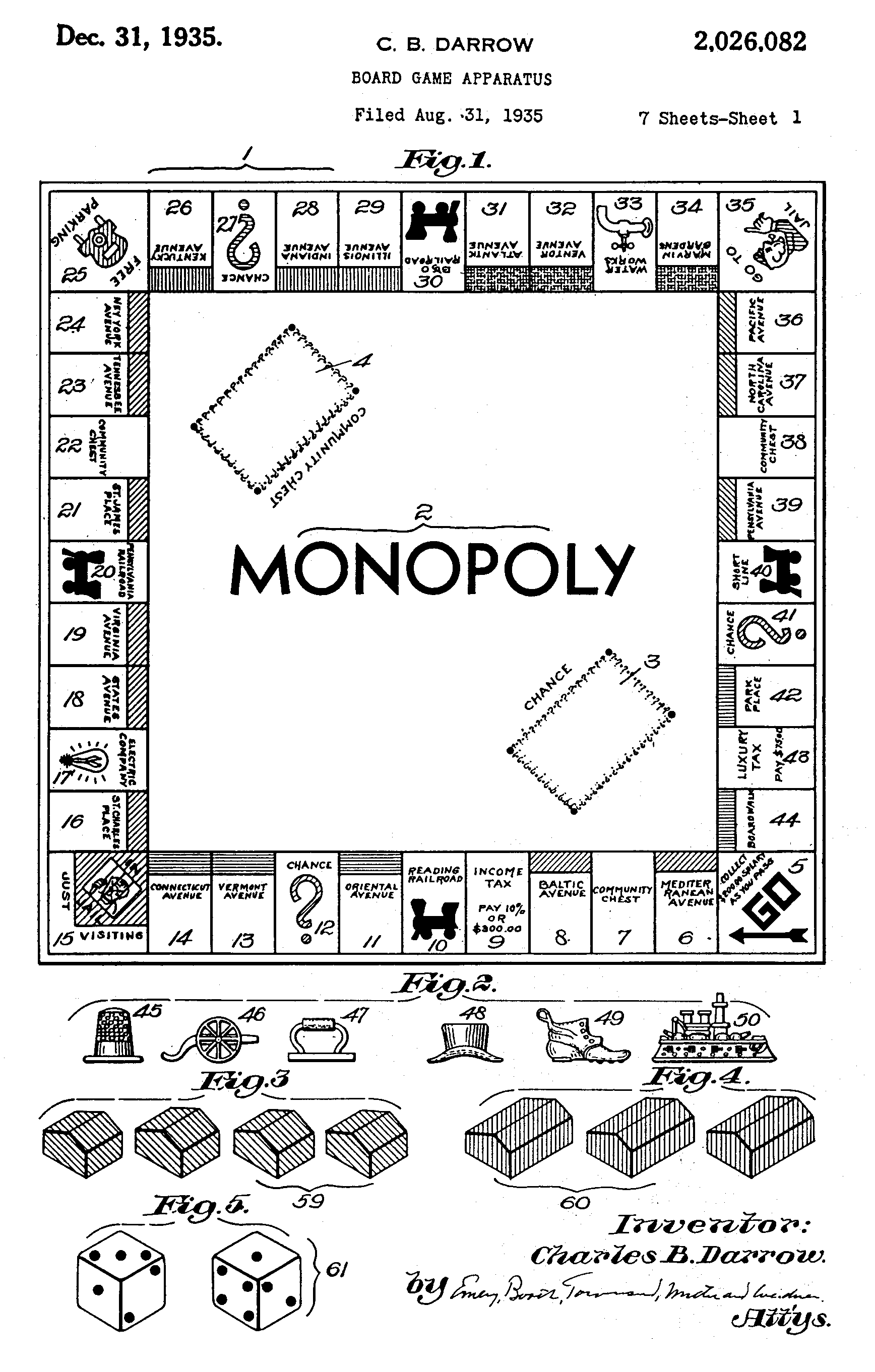

What Parker Brothers knew, and when
Parker Brothers’ executives — specifically the company president George Parker — knew about the Landlord’s Game. They knew about Lizzie’s patent. They had been approached by other Landlord’s Game variants in the years before Darrow appeared. After signing Darrow, Parker Brothers spent 1935 quietly buying up the rights to every Landlord’s Game variant it could find.
In 1935 they approached Lizzie Magie. They offered her five hundred dollars for her 1924 patent, with a vague promise that they would publish her original Landlord’s Game alongside Monopoly. Lizzie agreed. She received the five hundred dollars. The Landlord’s Game was published by Parker Brothers in 1939 in a tiny print run that did not sell well, after which they let it go out of print. She received no royalties on Monopoly. She watched Charles Darrow’s name printed on the inside of every box. She was, by every account of those who knew her, furious.
In 1936 she gave interviews to The Washington Post and The Evening Star in which she set out, plainly, that she had invented the game and that Charles Darrow had not. Both papers ran the story. She held up her two patents to the camera. The story did not catch on. The Parker Brothers narrative was already in motion.
[IMAGE PLACEHOLDER — Lizzie Magie holding her 1904 and 1924 patents, from the 1936 Evening Star interview. The original photograph is held in the Library of Congress newspaper archive; we have not yet secured a digital reproduction.]
“There is nothing new under the sun, but there are some things which are very, very old. This game is one of them. It is the result of years of work and study by myself, and I do not propose to be deprived of credit for it.” — Elizabeth Magie, The Washington Post, 1936
The lawsuit that uncovered everything
Lizzie died in 1948. She was eighty-two. Her grave in Columbia Gardens Cemetery in Arlington, Virginia, was unmarked for decades.
The full story of her authorship was excavated almost by accident, thirty years after her death. In the 1970s an economics professor named Ralph Anspach invented a board game called Anti-Monopoly, in which players began the game already monopolised and had to break the monopolies up. Parker Brothers — by now owned by General Mills — sued him for trademark infringement. Anspach countersued, arguing that “Monopoly” had never been a valid trademark in the first place because the game was not Charles Darrow’s original invention but rather a derivative of decades of prior work.
To prove this, Anspach went looking for evidence. He found Charles Todd, by then in his eighties, who confirmed the Germantown teaching session. He tracked down old players of the Atlantic City Quaker version. He found Lizzie’s patents in the patent office. He found her interviews. He found her grave.
The lawsuit lasted nearly a decade, went all the way to the United States Supreme Court, and Anspach eventually won in 1983. The court ruled that “Monopoly” was a generic term and that Parker Brothers did not have an exclusive trademark over it. More importantly, the trial record now contained — under oath, with documentary evidence — the full prior history of the game. Lizzie Magie’s authorship became, finally, a matter of legal record.
She had been dead for thirty-five years.
[IMAGE PLACEHOLDER — Ralph Anspach with his Anti-Monopoly game, courtroom-era photograph, early 1980s. Anspach’s personal papers are held at the University of California, San Francisco.]
Lizzie’s name, finally, on the box
It took another three decades for the story to reach a wide popular audience. In 2015 the journalist Mary Pilon published The Monopolists, a book-length investigation that drew on the Anspach trial record, on Lizzie’s papers, on the Parker Brothers archive, and on extensive original reporting. The book made the story a matter of public knowledge for the first time. The New York Times ran an excerpt on the front of its business section in February of that year under the headline Monopoly’s Inventor: The Progressive Who Didn’t Pass ‘Go.’
In the years since, Hasbro — the current owner of Monopoly — has, slowly and quietly, begun to acknowledge Lizzie Magie’s role. There is a “Ms. Monopoly” edition. The corporate website mentions her name. A blue historical marker has been placed near the site of her grave in Arlington. None of this, of course, returns the royalties she did not receive, or the credit she did not get during her lifetime, or the hundred years in which her name was missing from the inside of the box.
But it is something.

.jpg)
Why we are making this game
We are not under the illusion that publishing a faithful recreation of The Landlord’s Game in 2026 is going to redirect a hundred and twenty-two years of misattribution. The corporate machinery around Monopoly is older than the Eiffel Tower. It will outlast us. We are not setting out to compete with it.
We are setting out to do something smaller and, we hope, more useful: to put Lizzie’s actual game — both rulesets, the original property names, the 1904 patent on the title screen, her name on the box, her photograph in the booklet — into a form that a person can sit down with on a Tuesday night in the year 2026 and play. The Single Tax mode and the Monopolist mode side by side. The board as she drew it. The rules as she wrote them.
We are not the first to attempt this. There have been small print runs and academic editions over the years, and Thomas Forsyth’s research site landlordsgame.info has done the painstaking archival work of preserving the variants. We are standing, very gratefully, on top of that scholarship. But there has not yet been a digital edition that takes the original game seriously as the original game — not as a curiosity, not as a Monopoly-with-an-asterisk, but as Lizzie Magie’s Landlord’s Game, played in 2026 the way it was meant to be played.
That is what we are making.
It will be ready when it is ready.
Sources & further reading
Primary sources
- US Patent No. 748,626 — Elizabeth J. Magie, Game-Board. Filed 23 March 1903; granted 5 January 1904. Available via the United States Patent and Trademark Office.
- US Patent No. 1,509,312 — Elizabeth Magie Phillips, Game-Board. Filed 23 February 1923; granted 23 September 1924. Available via Google Patents.
- US Patent No. 2,026,082 — Charles B. Darrow, Board Game Apparatus. Filed 31 August 1935; granted 31 December 1935. Available via Google Patents.
- The Washington Post, January 1936 — interview with Lizzie Magie disputing the Charles Darrow attribution.
- The Evening Star (Washington, D.C.), 1936 — companion piece to the Post interview, including photographs of Magie holding her patents.
Books
- Mary Pilon, The Monopolists: Obsession, Fury, and the Scandal Behind the World’s Favorite Board Game (Bloomsbury, 2015). The definitive modern history.
- Ralph Anspach, The Billion Dollar Monopoly Swindle (Anti-Monopoly, Inc., 1998). A first-hand account from inside the lawsuit that surfaced the prior art.
- Philip E. Orbanes, The Game Makers: The Story of Parker Brothers (Harvard Business School Press, 2003). The Parker Brothers side of the story, written with archive access.
- Henry George, Progress and Poverty (1879). The book that gave Lizzie her politics. Project Gutenberg has a free edition.
Articles
- Mary Pilon, “Monopoly’s Inventor: The Progressive Who Didn’t Pass ‘Go,’” The New York Times, 13 February 2015.
- Christopher Ketcham, “Monopoly Is Theft,” Harper’s Magazine, 19 October 2012. A long essay on the political history of the game.
- Antonia Noori Farzan, “The Forgotten Female Activist Who Invented Monopoly,” The Washington Post, 11 February 2019.
Archives & online resources
- landlordsgame.info — Thomas Forsyth’s archival site, indispensable. Photographs of nearly every known variant of the Landlord’s Game and its descendants.
- The Strong National Museum of Play (Rochester, NY) — holds Charles Darrow’s circular oilcloth board and a substantial Landlord’s Game / Monopoly archive.
- The Smithsonian National Museum of American History — holds patent papers and several Magie-era boards.
- Wikipedia: The Landlord’s Game and Wikipedia: Elizabeth Magie — well-sourced summaries with public-domain image archives at Wikimedia Commons.
A note on images
All images embedded above are hot-linked from Wikimedia Commons and are either public domain (pre-1928) or released under permissive licenses by their respective uploaders. For the final published edition we will host local copies and replace the placeholder sections (the 1906 newspaper advertisement, the Atlantic City Quaker oilcloth boards, the 1936 Magie interview photograph, and the Anspach courtroom photographs) with archival reproductions sourced from the Library of Congress, the Strong National Museum of Play, and the UCSF special collections.
This piece is the first in a series. The next entry in the Diary covers the Atlantic City Quaker community in detail — the people, the boards, and the version of the game from which Charles Darrow worked.